

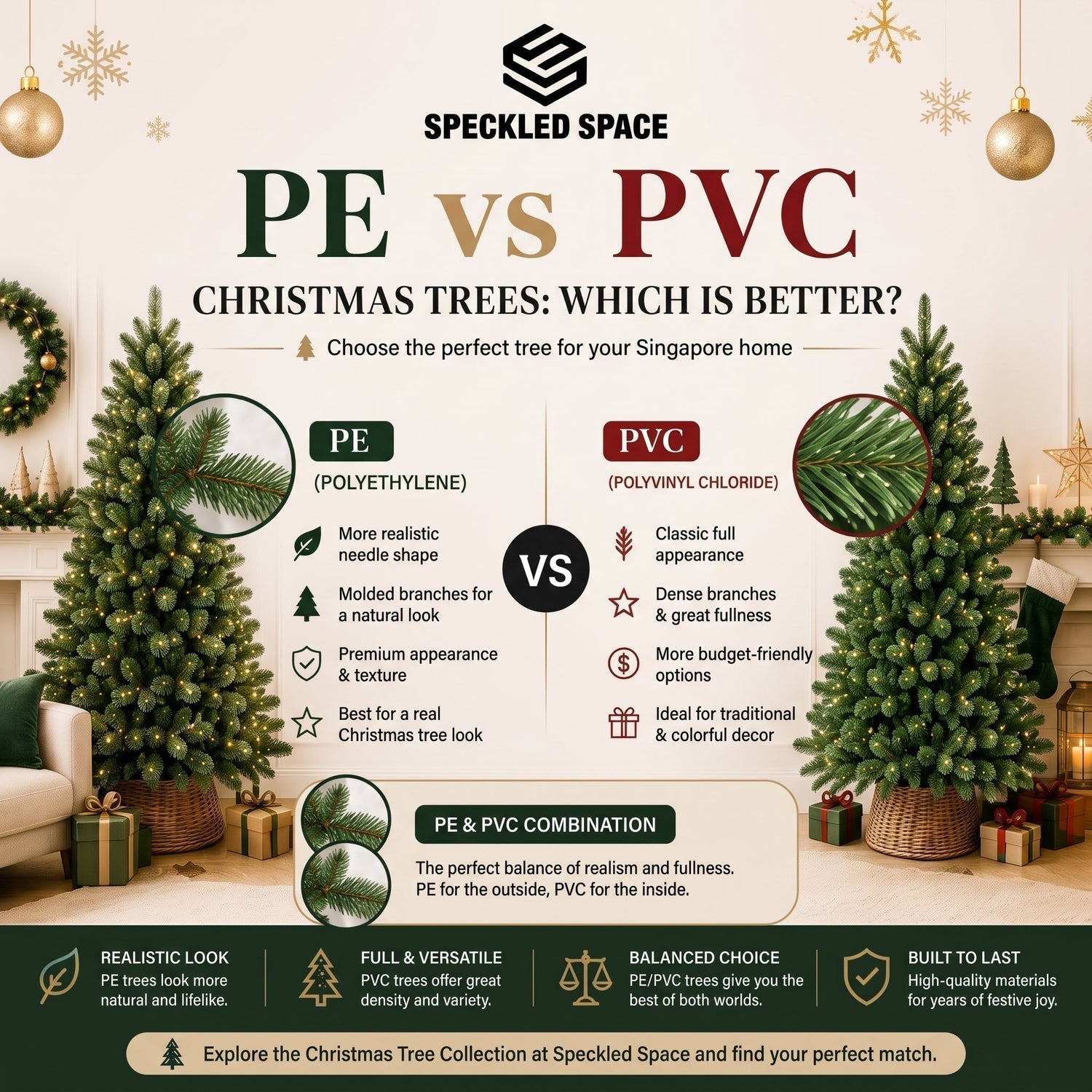
Choosing an artificial Christmas tree is about more than finding the right height or colour. One of the most important decisions is the type of material used for the tree branches. When shopping for an artificial Christmas tree, you'll commonly come across two materials: PE (polyethylene) and PVC (polyvinyl chloride).
So, which is better: PE or PVC?
The answer depends on what matters most to you. PE Christmas trees are generally preferred for their realistic appearance, while PVC trees can offer dense foliage and a more traditional artificial Christmas tree look. Some trees also combine PE and PVC to balance realism, fullness and value.
If you're choosing a Christmas tree for your Singapore home, Speckled Space can help you understand the difference between PE and PVC Christmas trees before you make your decision.
What is a PE Christmas Tree?
PE stands for polyethylene, which is the industry standard for creating a realistic artificial Christmas tree. To offer an even higher quality centrepiece for your home, our realistic tips are crafted from an innovative, plant-based PE material.
This plant-based foliage is intricately moulded to mimic the exact structure of natural evergreen needles. Rather than using flat strips, these branches boast rich, three-dimensional textures and shapes. The result is a remarkably authentic which creates a Realistic Artificial Christmas trees that looks just like the real thing, even from a few inches away.
Why Choose a PE Artificial Christmas Tree in Singapore?
If you are searching for the most realistic artificial Christmas tree in Singapore, a plant-based PE model is often the preferred choice. These premium trees are designed for homeowners who prioritise authentic foliage shapes, superior visual depth and a luxurious overall appearance that rivals a real evergreen. The lifelike, three-dimensional structure of PE branches not only looks incredibly natural on its own, but also provides a much more convincing and sturdy foundation when decorated with your favourite holiday ornaments and lights.
Benefits of PE Artificial Christmas Trees
A PE artificial Christmas tree is a top choice for Singapore homes looking to achieve a premium, lifelike holiday aesthetic. You should consider a PE tree if you want:
- True-to-nature branch shapes and textures
- Exceptional visual depth and fullness
- A premium alternative to traditional PVC trees
- A realistic foundation for heavy ornaments and lights
For local homeowners wanting the beauty of a real winter evergreen without the mess, investing in a high-quality PE artificial Christmas tree in Singapore delivers unmatched realism and elegance.
What is a PVC Artificial Christmas Tree?
PVC (polyvinyl chloride) is the classic material responsible for the thick, lush appearance of traditional artificial Christmas trees. These branches are crafted using flexible PVC strips that allow the needles to fan out beautifully, creating an incredibly dense, opaque backdrop. It remains a beloved choice for its ability to provide a voluminous, full-looking silhouette that beautifully anchors your curated festive decor.
Why Choose a PVC Christmas Tree? A PVC tree might be the perfect fit for your space if you prioritise:
- Lush fullness: Ideal for those who love a thick, traditional-looking canopy with very few sparse spots.
- Budget-friendly grandeur: An excellent way to get a large-scale, impressive artificial tree at an accessible price point.
- Ornament-friendly structure: The dense, flexible branches are excellent for holding layered decorations and helping to hide light wires.
- Hybrid versatility: PVC is frequently paired with premium PE foliage to build inner density in combination trees.
PE vs PVC Christmas Trees: Key Differences
Understanding the difference between PE and PVC Christmas trees becomes easier when you compare them based on appearance, construction, fullness and overall style.
|
Feature |
PE Christmas Tree |
PVC Christmas Tree |
|
Appearance |
More realistic and natural-looking |
Traditional artificial-tree appearance |
|
Branch shape |
Three-dimensional moulded foliage |
Flexible PVC strips |
|
Texture |
More detailed |
Generally flatter |
|
Foliage look |
Natural-looking |
Dense and traditional |
|
Premium feel |
Usually higher |
Can be more budget-friendly |
|
Decorating style |
Works well with realistic or premium themes |
Works well with classic and colourful themes |
|
Best for |
Realism-focused buyers |
Traditional and value-focused buyers |
Keep in mind that the quality of an artificial Christmas tree depends on more than its material. Branch density, construction, shape and overall design also affect how the finished tree looks.
PE vs. PVC: Which is the Most Realistic Artificial Christmas Tree?
If realism is your priority, PE foliage is the ultimate choice for your Singapore home. Because PE branches are expertly moulded into three-dimensional shapes, they capture the natural imperfections and depth of a real pine tree. A premium PE tree acts as a highly convincing centrepiece before you even add lights. While PVC trees are attractive and full, their classic construction is noticeably more artificial.
PE vs. PVC: Which Creates a Fuller Silhouette?
Comparing fullness requires looking at the bigger picture. PVC naturally creates a highly dense, thick canopy because of how the flexible material is arranged. However, an expertly constructed PE tree with a high branch count will also offer a breathtakingly full silhouette. If you are looking for the most dense artificial Christmas tree, evaluate the total tip count and structural profile rather than just the primary material.
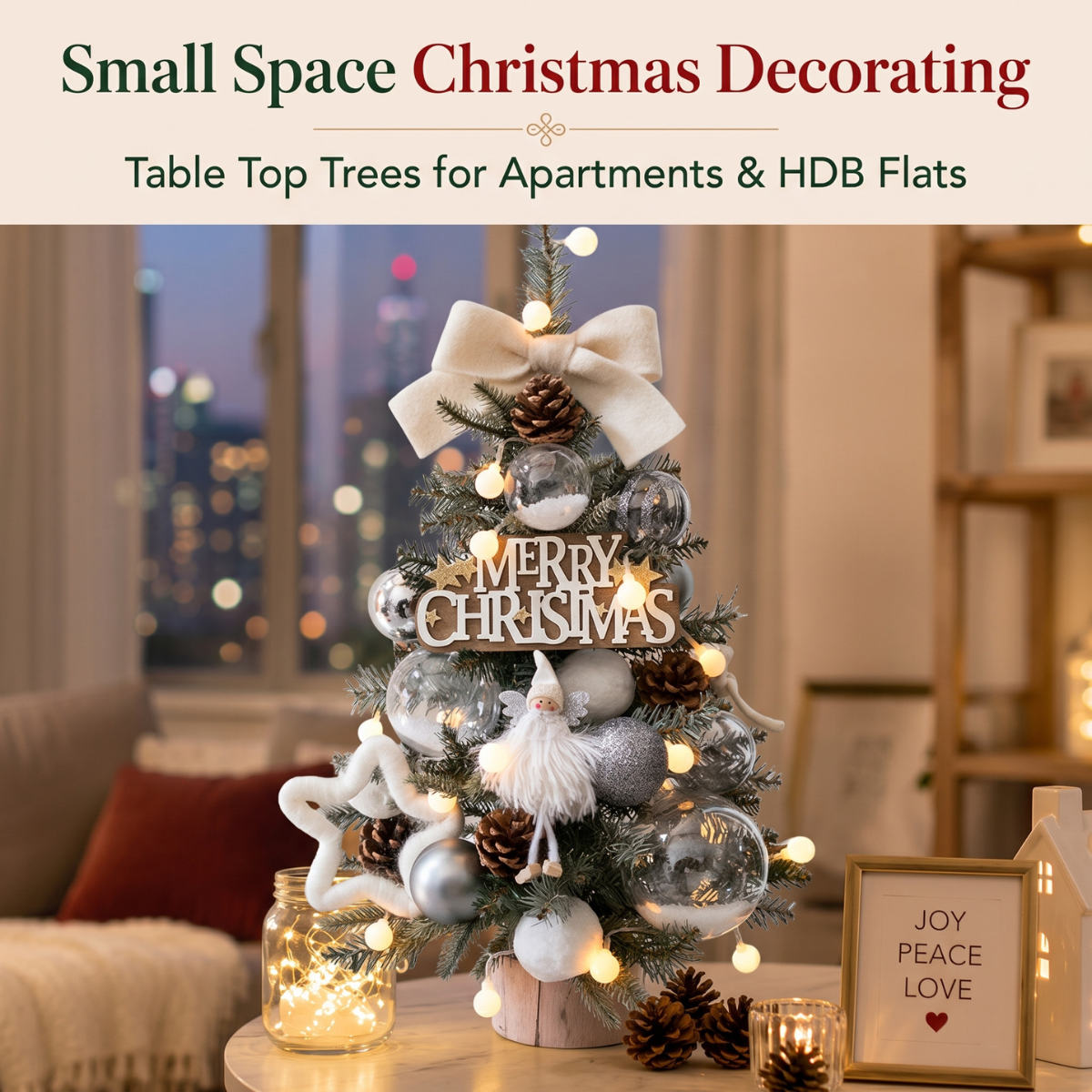
Singapore homes range widely in size, from cosy HDB flats and contemporary condos to spacious landed properties. Because of this, the best material ultimately depends on your unique floor plan and lifestyle.
For more compact spaces, prioritising a slim-profile tree—whether PE or PVC—ensures a festive atmosphere without interrupting your living room’s natural flow. Conversely, expansive living areas provide the perfect canvas for a grand, full-profile PE or hybrid tree to serve as a breathtaking centrepiece.
While the foliage material is a crucial starting point, finding your perfect tree involves looking at the complete picture. Before making your decision, consider:
- Spatial dimensions: Tree height and width relative to your room size and standard ceiling heights (remember to leave breathing room for a topper!).
- Aesthetic goals: Your desired branch density and how the tree complements your interior design—whether your home leans toward minimalist Japandi styling or a more traditional look.
- Practicalities: Your budget and the reality of off-season storage in household shelters or storerooms.
What About PE and PVC Combination Christmas Trees?
You don't necessarily have to choose between 100% PE and 100% PVC. Many premium artificial Christmas trees use a combination of both materials to maximise both aesthetics and value.
Because trees crafted entirely from PE foliage are significantly more expensive to manufacture, a hybrid model offers a much more pocket-friendly alternative. This clever design places highly realistic PE branches on the outer edges where they are fully visible, while utilising flexible PVC foliage deeper inside the tree to build density and mask the trunk.
Since the inner tips are rarely seen from a distance—especially once your tree is fully decorated—this mixture delivers the exact same luxurious, lifelike effect as a full-PE tree, but at a much more accessible price point.
The result is the ultimate balance of:
- A remarkably realistic outer appearance
- Luxuriously dense, gap-free foliage
- Exceptional, budget-friendly value
A PE/PVC combination is the ideal choice if you want a show-stopping, premium-looking Christmas tree without paying the premium price tag for unseen inner branches.
Which Is Easier to Decorate?
Whether you choose the lifelike realism of PE or the classic fullness of PVC, both materials beautifully showcase traditional lights, ribbons and festive baubles. Ultimately, the ease of decorating comes down to the tree's branch structure rather than the material itself.
A highly dense tree provides a lush, opaque canvas that effortlessly hides wires and fills visual gaps, perfect for a heavily layered look. Conversely, a tree with deliberately well-spaced branches offers elegant "hanging room," making it much easier to showcase larger, statement ornaments or achieve a more refined, minimalist aesthetic. When planning your holiday styling, focus on how the tree's specific silhouette supports your overall design vision.
Does Tree Material Affect Storage?
Regardless of whether you choose a PE or PVC artificial Christmas tree, proper off-season storage is essential—especially in Singapore's warm and humid climate. To ensure your tree remains in pristine condition year after year, follow these simple steps before packing it away:
- Remove all decorations and lights (unless you have a pre-lit model).
- Disassemble the tree sections according to the provided instructions.
- Gently wipe away any visible dust and ensure the branches are completely dry.
- Pack the components securely to protect them from moisture and pests. To make this effortless, every Christmas tree purchased from Speckled Space includes a complimentary, heavy-duty storage bag.
Keeping your tree properly protected guarantees it will emerge looking just as lush and vibrant for your next festive season.
PE vs PVC Christmas Tree: Which One Should You Buy?
So, is PE or PVC better? While both materials have their merits, the most stunning holiday displays often come from combining the best of both worlds.
Choose a 100% PE Christmas Tree If:
- You want a highly realistic, organic appearance.
- You prefer a slightly more open branch structure that mimics a wild evergreen.
Choose a 100% PVC Christmas Tree If:
- You prefer a highly traditional, nostalgic artificial tree look.
- You are decorating on a strict budget and prioritise volume over realism.
Choose a Hybrid PE/PVC Tree (The Speckled Space Favourite) If:
- You refuse to compromise: You want breathtaking, lifelike realism on the outside and luxurious, gap-free fullness on the inside.
- You want premium value: You want the ultra-high-end aesthetic of a fully plant-based PE tree, but at a much more accessible and pocket-friendly price point.
- You love a heavily decorated tree: The PVC core provides the perfect, sturdy backdrop for hiding light wires and supporting heavy ornaments, while the PE tips extend outward for a natural silhouette.
- You want the ultimate centrepiece: This is the industry standard for luxury artificial trees, offering the absolute best balance of beauty, durability and density for your Singapore home.

Find the Right Christmas Tree for Your Singapore Home
Choosing between PE and PVC is only one part of finding the perfect Christmas tree. You should also consider the tree's height, width, shape, branch density and overall style.
For smaller HDB flats and apartments, a slim 5ft or 6ft tree may be more practical. Larger homes may have enough room for a full 7ft or 8ft Christmas tree.
At Speckled Space, you can explore a range of Christmas tree styles designed to help you create a festive atmosphere in your Singapore home.
Whether you prefer the realistic appearance of PE foliage, the traditional fullness of PVC or the balance of a PE/PVC combination, choose a tree that fits both your space and your Christmas decorating vision.
Explore the Speckled Space Christmas Tree Collection to find a tree that suits your home, style and festive plans.
Frequently Asked Questions
Is PE better than PVC for Christmas trees?
PE is generally better if your priority is realistic-looking foliage. PVC can be a good choice if you prefer dense, traditional artificial-tree foliage. Your ideal choice depends on your appearance, space and budget preferences.
Do PE Christmas trees look more realistic?
Yes. PE branches are moulded into three-dimensional shapes that can closely resemble natural evergreen foliage, making PE trees generally more realistic than traditional PVC-only trees.
Are PVC Christmas trees good?
Yes. PVC Christmas trees remain a popular option because they can provide dense foliage and a traditional Christmas-tree appearance. They're suitable for many different decorating styles.
What is a PE and PVC Christmas tree?
A PE/PVC Christmas tree combines polyethylene and polyvinyl chloride foliage. This combination can provide realistic-looking outer branches while adding fullness through PVC foliage.
Which is better for a small HDB flat, PE or PVC?
The tree's size and profile may matter more than the material. For a small HDB flat, consider a slim-profile tree in the height that fits your ceiling and floor space comfortably.
How do I make a PVC Christmas tree look more realistic?
Fluff the branches carefully after assembly, spread the foliage evenly, add warm lighting and use layered ornaments and ribbons. Proper shaping can significantly improve the appearance of an artificial tree.
Are PE Christmas trees worth the investment?
If realistic appearance and a premium finish are important to you, a PE Christmas tree can be worth considering. However, compare the complete construction, branch density and dimensions rather than choosing solely based on material.
Should I buy a PE, PVC or PE/PVC Christmas tree?
Choose PE for realism, PVC for traditional dense foliage or PE/PVC if you want a balance of realistic appearance and fullness. The best option ultimately depends on your home's space, decorating style and budget.

Leave a comment
This site is protected by hCaptcha and the hCaptcha Privacy Policy and Terms of Service apply.