

Choosing a Christmas tree often comes down to two familiar materials: PVC and PE. Both are used in artificial christmas trees, but they create very different results in realism, texture, and cost. For shoppers comparing pvc or pe christmas tree options, the key question is simple: do you want the fuller, classic look at an affordable price, or the more lifelike finish that comes closer to natural evergreens? This guide breaks down what each material means, how they look, and which one fits different homes and budgets.
What Is a PVC or PE Christmas Tree?

A PVC or PE Christmas tree refers to an artificial tree made with either polyvinyl chloride (PVC) needles, polyethylene (PE) tips, or a mix of both. These two materials dominate the market because they cover most shopper needs, from budget-friendly decorating to highly realistic christmas trees. PVC is known for volume and value, while PE focuses on shape and detail. The better choice depends on where the tree will sit, how closely people will view it, and how much realism matters versus upfront cost.
What Is a PVC Christmas Tree?
A PVC christmas tree uses polyvinyl chloride needles made from flat strips that are cut and shaped to mimic foliage. The material is widely used because it creates a dense structure that looks full once the branches are fluffed. Many shoppers like the classic needle foliage effect, especially for traditional christmas trees that need to feel abundant under lights and ornaments. PVC options are usually cheaper to produce, which is why they often come with an affordable price. That makes them a smart fit for budget-focused buyers, secondary rooms, or decorative displays seen mostly from a distance.
How PVC Needles Are Made
PVC needles start as flat pvc strips that are cut thin and twisted between two wires. That construction gives the tree its shape and branch volume. Up close, the surface looks flatter and less dimensional than molded tips, but the overall effect can still be attractive and full.
What Is a PE Christmas Tree?
A PE christmas tree is made with polyethylene, usually through injection-molded needle tips. The molds are created to replicate the look of real evergreen branches, which is why PE is often the preferred material for replicating nature. The result is a more natural, 3D finish with thicker needles and more believable texture. This makes PE especially appealing for realistic christmas trees placed in living rooms, entryways, or premium displays. Because the molding process is more detailed, PE usually sits at a higher price point than PVC.
How PE Creates a Realistic Look
Real branches are used to shape the molds, giving each tip depth, thickness, and natural variation. That process creates a lifelike and feel of evergreen foliage that closer resembles a balsam hill needle or classic needle foliage than flat strips ever could.
PVC vs PE Christmas Tree: Key Differences
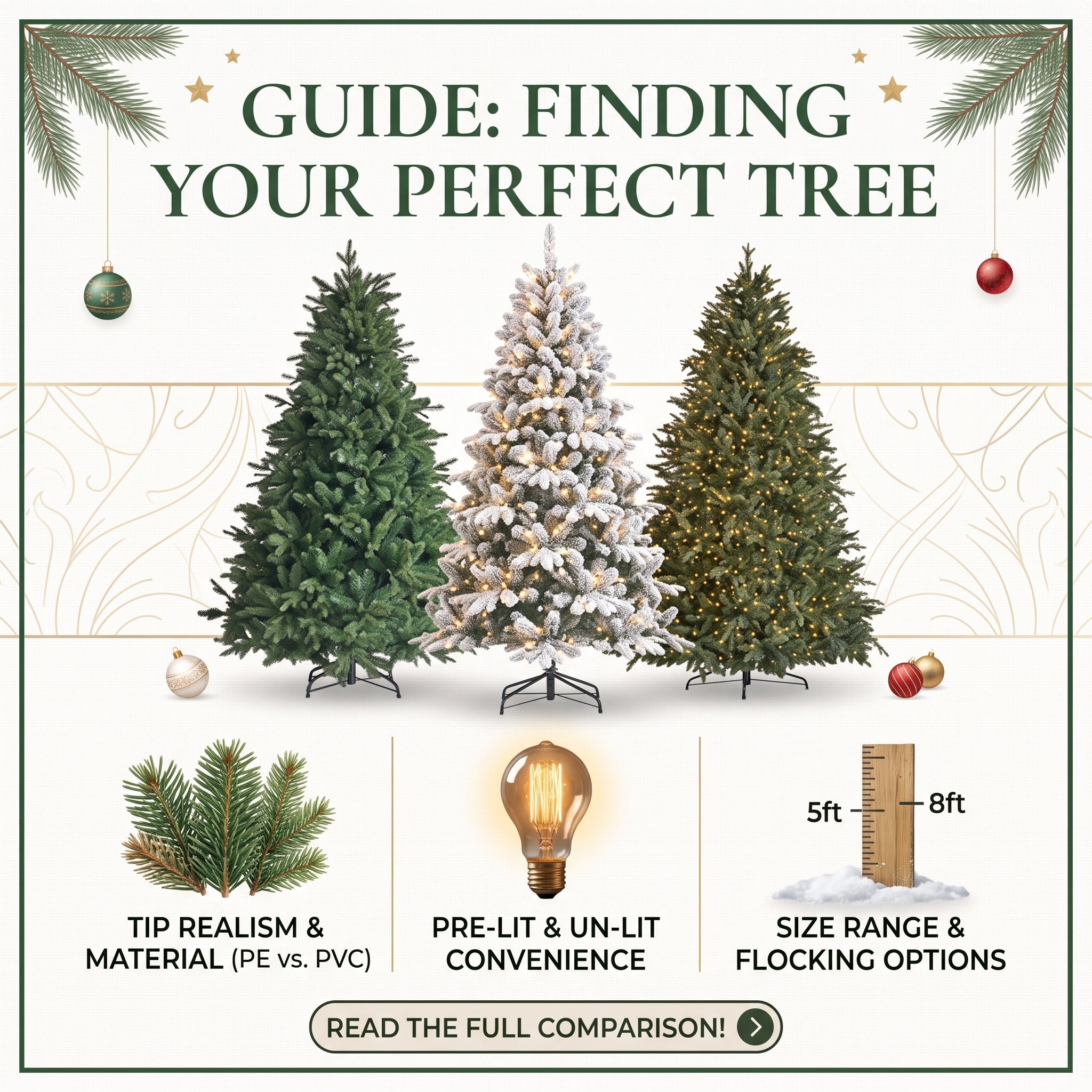
The main difference between pvc and pe comes down to how each material balances realism, durability, and price. PVC tends to look fuller and more traditional, especially at a glance, while PE looks more natural from close range thanks to its molded shape. In repeated setup and storage, both can last well, but PE often feels like a longer-lasting artificial christmas tree because the needle form holds its appearance better. PVC is the stronger value play, while PE is the stronger realism play. For many buyers, the best choice depends on whether the tree is mainly decorative or a centerpiece.
| Factor | PVC | PE |
|---|---|---|
| Look | Full, classic, slightly flatter | More natural and detailed |
| Texture | Flat pvc strips | 3D molded needles |
| Price | Usually lower | Usually higher |
| Best for | Budget and fullness | Realism and premium displays |
Appearance and Realism
PVC foliage uses flat PVC and PE styling, while PE adds 3D needle detail that looks closer to traditional christmas trees. From across a room, both can work well, but PE wins for lifelike finish.
Durability and Longevity
Both materials can handle repeated setup, but PE needles often keep their shape better after storage. PVC branches are reliable, though the flatter strip design may show wear sooner if handled roughly.
Which Looks More Realistic?
If realism is the goal, PE is the preferred material for replicating the look of real evergreens. Its molded tips create depth, shadow, and natural variation that PVC cannot fully match. That said, PVC can still look convincing when the tree is heavily decorated or viewed from a few steps away. The right choice depends on placement. A minimalist tree in a bright corner will reveal more detail, while a heavily ornamented setup can soften the differences. For shoppers deciding between visual impact and cost, the viewing distance matters as much as the material itself.
Best Choice for Close-Up Viewing
PE is the safer choice for living rooms, entryways, and focal points where guests stand nearby. The closer the tree is to eye level, the more those molded details matter.
Which Is More Affordable?
PVC is usually the lower-cost option because the needles are simpler to manufacture. PE costs more since it uses molds, more detailed construction, and a process designed for realism. For many homes, that makes PVC the smarter purchase when the tree is for a child’s room, an office corner, or a second display. If the tree will be used for many years and shown prominently, the higher upfront cost of PE may deliver better long-term value. The real question is whether realism is worth paying extra for on day one.
PVC and PE: Which Is Easier to Decorate?
Branch density affects how easy a tree is to style. Fuller PVC trees can hide gaps more easily, which helps with ornaments, ribbons, and garlands. They also support a busy, traditional look with lots of lights. PE trees usually have more defined branch structure, so they may take a little more arranging, but they work beautifully for minimalist decorating where each ornament is meant to stand out. Heavy decorations can be supported by both, though a mixed tree often gives the best balance of shape and strength.
How to Choose the Right Artificial Christmas Tree
The best artificial trees are the ones that fit the room, budget, and decorating style without feeling like a compromise. For family homes, a mixed PE and PVC tree can offer a practical middle ground: PE tips near eye level for realism, and PVC deeper in the branches for fullness and value. Offices and storefronts often benefit from PE if the display is highly visible, while secondary spaces can use PVC without losing impact. Start with how close people will stand to the tree, how often it will be reused, and whether the final look should feel premium or simply festive.
Choose PVC If...
Choose PVC if affordability matters most and the tree will be seen from a distance. It suits decorative corners, secondary rooms, and value-led seasonal styling.
Choose PE If...
Choose PE if realism is the top priority and the tree will be a main feature. It suits premium displays, long-term ownership, and close-up viewing.
Is PVC Safe for a Christmas Tree?
PVC is generally safe when the tree is made by a reputable manufacturer and meets basic product standards. As with any artificial christmas tree, quality matters more than the material name alone. Buyers should look for reliable construction and clear product details rather than assuming one material is automatically safer than the other.
FAQ: PVC or PE Christmas Tree Questions
Shoppers usually ask the same few questions before deciding. What is a pe? It is polyethylene, the molded material used for lifelike branch tips. What is a pvc? It is polyvinyl chloride, the flatter, more affordable tree material. Which is better for realism? PE. Which is better for budget? PVC. If the tree will be a focal point, choose realism. If the main goal is value, choose the lower-cost option.
What Is a PE on a Christmas Tree?
PE means polyethylene, a molded material used to create realistic needles and branches. It gives the tree a more natural finish and a stronger lifelike presence.
What Is a PVC Christmas Tree?
PVC means polyvinyl chloride, a budget-friendly material shaped into flat strips. It is often used for full, classic artificial tree styles.
Which Is Better, PE or PVC?
The better choice depends on priorities: PE for realism and long-term display value, PVC for lower cost and fuller-looking everyday decorating.
Choosing Between PVC and PE
For many Singapore homes, the decision is less about rules and more about fit. PVC gives a fuller look at an affordable price, while PE delivers the realism that makes a tree feel closer to nature. If the tree is meant to impress up close, PE usually wins. If the priority is festive impact without a high spend, PVC makes strong sense. A hybrid tree often offers the most balanced option, especially for buyers who want a little realism without giving up fullness or value.

Leave a comment
This site is protected by hCaptcha and the hCaptcha Privacy Policy and Terms of Service apply.